Essex County Dog Registration Information
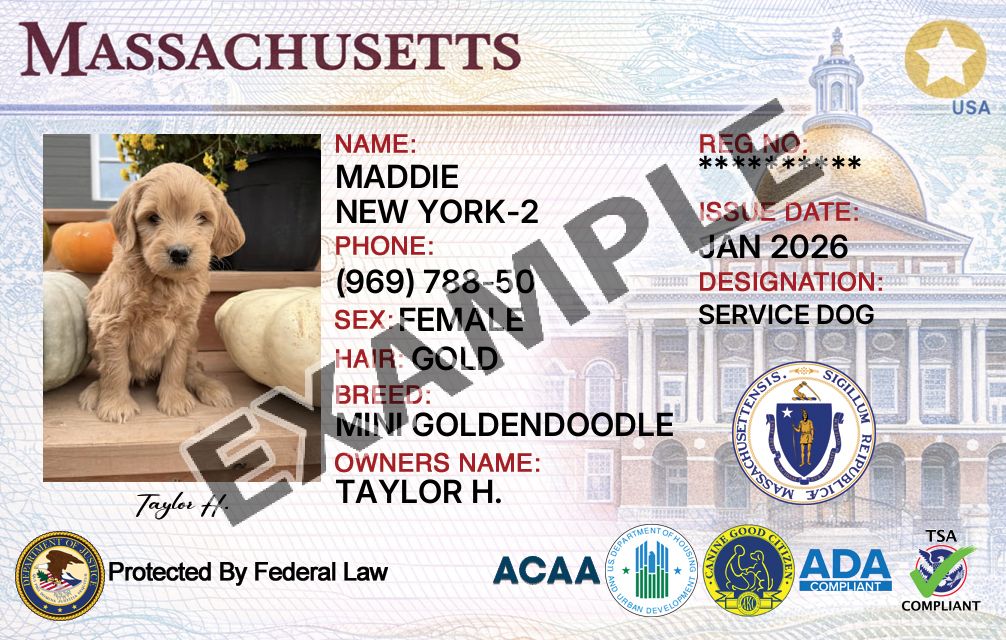
Service Dogs and Emotional Support Animals in Essex, Massachusetts
Registering a Service Dog or Emotional Support Dog in Essex County, Massachusetts
If you’re searching where do I register my dog in Essex County, Massachusetts for my service dog or emotional support dog, the key thing to know is this: Massachusetts does not have an official state or county “service dog/ESA registry”. What most people mean by “registering” is getting the required dog license in Essex County, Massachusetts—and that is typically handled by your city or town (usually the City/Town Clerk), not by the county.
This page explains how local dog licensing works, what rabies documentation is usually required, and the legal differences between a standard dog license, a service dog, and an emotional support animal (ESA)—so you can take the right steps without paying for third-party “registrations” that aren’t required.
Where to Register or License Your Dog in Essex County, Massachusetts
Because licensing is handled locally, you’ll generally register (license) your dog through your City Clerk or Town Clerk (or a similar municipal office). Below are several official examples within Essex County. If your city/town is not listed, contact your local clerk’s office and ask about dog licensing (sometimes called “dog registration”).
| Office | Address | Phone | Hours | |
|---|---|---|---|---|
|
Salem City Clerk (Dog Licenses)
Salem, MA
|
93 Washington Street
Salem, MA 01970
|
978-745-9595 | Not listed |
Mon–Wed: 8:00 AM–4:00 PM
Thu: 8:00 AM–7:00 PM Fri: 8:00 AM–12:00 PM |
|
Beverly City Clerk (Dog Licenses)
Beverly, MA
|
191 Cabot Street
Beverly, MA 01915
|
978-605-2324 | Not listed |
Mon–Wed: 8:30 AM–4:30 PM
Thu: 8:30 AM–7:30 PM Fri: 8:30 AM–1:00 PM |
|
Lawrence City Clerk
Lawrence, MA
|
200 Common Street, 1st Floor, Room 107
Lawrence, MA 01840
|
978-620-3230 | Not listed |
Mon: 8:30 AM–4:30 PM
Tue: 8:30 AM–7:00 PM Wed: 8:30 AM–4:30 PM Thu: 8:30 AM–4:30 PM Fri: 8:30 AM–1:30 PM |
|
Haverhill City Clerk
Haverhill, MA
|
Haverhill City Hall, Room 118
4 Summer St.
Haverhill, MA 01830
|
978-374-2312 | cityclerk@haverhillma.gov |
Mon–Fri: 8:00 AM–4:00 PM
|
|
Gloucester City Clerk (Dog Licensing)
Gloucester, MA
|
9 Dale Avenue
Gloucester, MA 01930
|
Not listed | Not listed | Not listed |
|
Town of Essex (Dog Licenses & Information)
Essex, MA
|
Not listed | Not listed | Not listed | Not listed |
|
Town of Lynnfield (Dog Licensing)
Lynnfield, MA
|
Not listed | 781-334-9400 | Not listed | Not listed |
If you’re looking specifically for animal control dog license Essex County, Massachusetts resources: animal control officers typically help enforce local licensing, rabies compliance, and leash/bylaw issues, but the license issuance is most often handled through the clerk’s office.
Overview of Dog Licensing in Essex County, Massachusetts
What a Dog License Is (and Why It Matters)
A municipal dog license is your city/town’s record that a specific dog lives at a specific address and is associated with a specific owner. It supports public health and animal control work, including rabies control efforts, reunification of lost dogs, and enforcement of local bylaws. When people ask where to register a dog in Essex County, Massachusetts, the answer is almost always: your local City Clerk or Town Clerk (or their designated licensing office).
County vs. Local Responsibility
Unlike some states that use county-run animal services for licensing, Massachusetts dog licensing is commonly handled at the municipal level. Even though you may live in Essex County, your dog license in Essex County, Massachusetts is normally issued by your city or town (for example, Salem, Beverly, Gloucester, Haverhill, Lawrence, Essex, Lynnfield, and others).
Rabies Enforcement and Public Health
Massachusetts cities and towns also have roles in rabies control and animal health coordination. The Commonwealth appoints a municipal animal inspector for each city/town, and rabies control is a central responsibility. In practical terms, that’s why dog licensing processes so often require proof of a current rabies vaccination before a license can be issued or renewed.
How Dog Licensing Works Locally in Essex County, Massachusetts
Step-by-Step: How to Get a Local Dog License
- Find your licensing office. Start with your city/town’s official website and look for “Dog License,” “Dog Licensing,” or “Dog Registration.” In many Essex County municipalities, this is managed by the City Clerk or Town Clerk.
- Confirm your dog meets the local age requirement. Many Massachusetts municipalities license dogs once they’re at least six months old.
- Gather documentation. Most offices require proof of current rabies vaccination. Some also ask for proof of spay/neuter to qualify for a lower fee.
- Apply (online, by mail, or in person). Procedures vary by city/town. Some accept over-the-counter licensing; others primarily process by mail/online and mail the tag back to you.
- Pay the municipal fee and receive a tag. After approval, you receive a dog tag (often annually). Keep it attached to your dog’s collar as required by local rules.
Rabies Vaccination Requirements (What “Current” Usually Means)
Your municipality typically won’t issue a license without proof of a current rabies vaccination. Massachusetts regulations generally treat an animal as “currently vaccinated” based on the vaccination timeline (including a waiting period after an initial vaccine) and the labeled duration for that vaccine. Your veterinarian’s rabies certificate is the document most often used for licensing.
If you’re unsure whether your documentation is acceptable, call your local clerk’s office and ask what they will accept (copy, scan, photo, or veterinarian letter). If your rabies certificate is expired or close to expiring, schedule a vaccine update first—doing that usually makes the licensing process smoother.
Deadlines, Late Fees, and Local Differences
Local rules vary. Some Essex County municipalities set renewal due dates around late March or early spring and may impose late fees after a certain date. Always check your own city/town for: renewal deadlines, grace periods, late fees, and enforcement practices.
What If My Dog Is a Service Dog or ESA?
A service dog or emotional support animal is still a dog living in your municipality. That means you generally still complete the normal licensing steps and provide the normal health documentation. The dog’s legal status (service dog vs. ESA vs. pet) affects where the dog is allowed and what accommodations may apply—but it does not replace the requirement to get a local dog license.
Service Dog Laws in Essex County, Massachusetts
What Counts as a Service Dog
A service dog is generally a dog (and in limited contexts a miniature horse) that is individually trained to do work or perform tasks for a person with a disability. The key is the trained task(s)—not a vest, a badge, or an online “registration.”
No Official “Service Dog Registration” Required
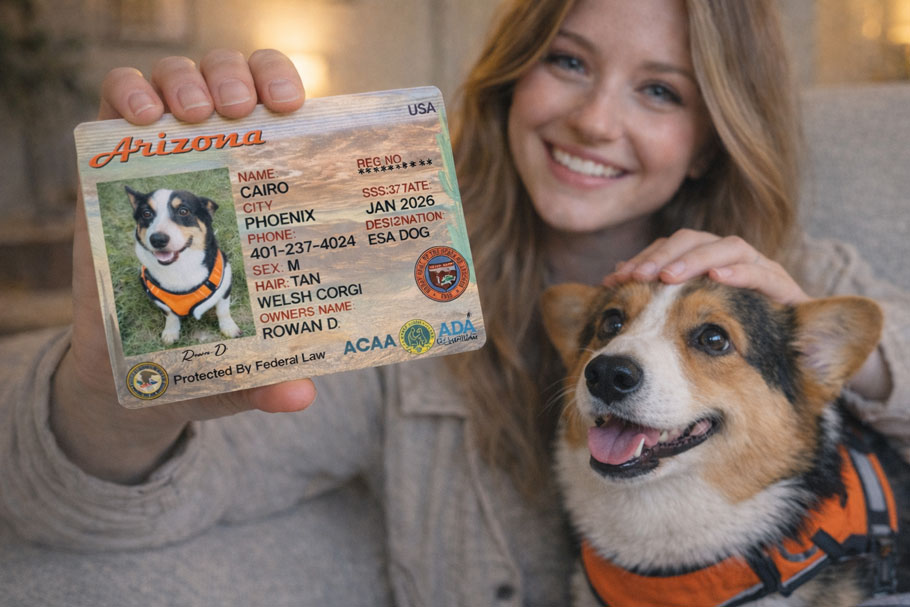
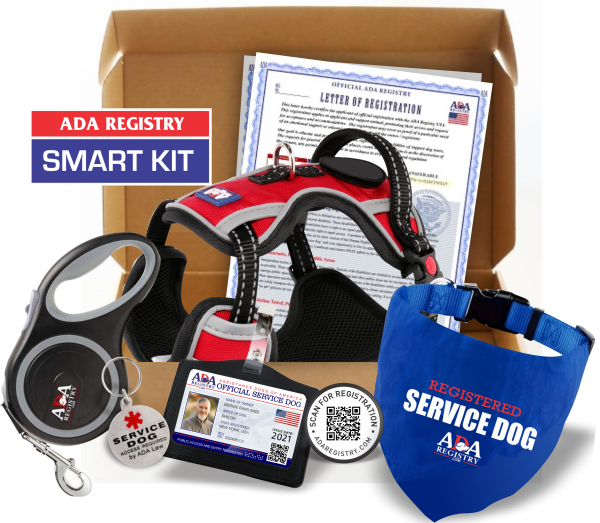
Massachusetts guidance explains that assistance animal owners are not required to possess certification or identification, and that while dogs must be registered (licensed) with their city/town, there is no official registry of assistance animals. In other words, your service dog’s legitimacy comes from the law and training—not from purchasing an ID card or listing the dog on a website.
What You Still Must Do Locally
- Get and renew the standard dog license in Essex County, Massachusetts through your local city or town.
- Keep rabies vaccination current and maintain proof for licensing and public health needs.
- Follow local rules that apply to all dogs, such as leash laws, waste cleanup rules, and nuisance control (unless a specific law provides an exception in a specific setting).
Emotional Support Animal Rules in Essex County, Massachusetts
What an Emotional Support Animal (ESA) Is
An emotional support animal provides comfort or support that can help with a disability-related need, but ESAs are generally not trained to perform specific tasks the way service dogs are. This distinction matters because ESAs and service dogs are treated differently under various laws (especially between public access vs. housing).
ESA “Registration” vs. Municipal Dog Licensing
If your goal is to comply with your city/town rules, what you need is a municipal dog license, not a purchased “ESA registration.” Massachusetts guidance emphasizes that all dogs (including assistance animals) must be registered with the city/town, and that there is no official assistance animal registry.
Where ESAs Commonly Matter Most: Housing
ESAs are most commonly addressed through housing accommodation processes. If you’re requesting an accommodation, the housing provider may ask for reliable documentation consistent with applicable law. That is separate from local licensing: you still handle your dog’s license through your city or town clerk’s office (and you still keep rabies vaccination current).
Frequently Asked Questions
Register A Dog In Other Massachusetts Counties
Select your county below to get started with your dog’s ID card. Requirements and license designs may vary by county, so choose your location to see the correct options and complete your pup’s registration.
- Barnstable County Dog Registration
- Berkshire County Dog Registration
- Bristol County Dog Registration
- Dukes County Dog Registration
- Franklin County Dog Registration
- Hampden County Dog Registration
- Hampshire County Dog Registration
- Middlesex County Dog Registration
- Norfolk County Dog Registration
- Plymouth County Dog Registration
- Suffolk County Dog Registration
- Worcester County Dog Registration